Scaling Roll Off Dumpster Business to Multiple Trucks
Scaling Roll Off Dumpster Business to Multiple Trucks:
The No-Fluff Playbook Every Operator Needs to Read
Let's set the scene.
A homeowner types "dumpster rental near me" into Google. A contractor needs a 30-yard bin on Monday. A property manager has three jobs lined up this week and she needs them handled now.
Here's the gut punch:
You could have taken every single one of those jobs. But you were booked. Or worse you missed the call entirely.
That's not just lost revenue. That's lost momentum, lost market share, and someone else building their empire with YOUR leads.
If scaling roll off dumpster business to multiple trucks is on your radar, this is the article that changes everything. Not theory. Not fluff. Real, sequential steps that actually work in the field.
Why Most Dumpster Operators Stay Stuck at One Truck
Here's what most owners believe:
"More trucks = more money."
And here's what actually happens when they act on that belief without a plan:
• Trucks sit idle for days at a time
• Lead flow is unpredictable and seasonal
• Cash flow gets dangerously tight
• Stress skyrockets — and so does burnout
The real problem isn't trucks. It's never been trucks.
The real problem is predictable demand. And until you solve that, adding equipment is just adding overhead.
Step 1 — Lock In Consistent Lead Flow Before Anything Else
Before you finance truck #2, before you hire a driver, before you even look at another vehicle — ask yourself this one honest question:
"Can I generate bookings on demand, every single week, right now?"
If the answer is anything other than a confident "yes" stop. Fix this first.
Scaling roll off dumpster business to multiple trucks without stable lead flow is like buying ten more ovens for a bakery with no customers walking in the door. You're not growing. You're bleeding.
What a reliable lead system looks like:
• High-intent Google searches capturing "dumpster rental near me" traffic
• Local SEO rankings that keep you visible 24/7 without ongoing ad spend
• Paid ads that put qualified calls in your pocket today not next quarter
When your lead system is running right, you're not chasing jobs. Jobs are coming to you.
Step 2 — Build a Booking Machine, Not Just a Website
Here's an uncomfortable truth about most dumpster rental websites: they look fine, and they do almost nothing.
A real booking machine does more than display your phone number. It works for you around the clock capturing leads while you sleep, qualifying prospects before they ever call, and converting browsers into booked jobs.
Your booking system needs to:
• Capture calls instantly with click-to-call functionality
• Offer online booking for after-hours jobs (this alone can add 15-20% more bookings)
• Pre-qualify customers so you're not wasting time on tire-kickers
• Create urgency "Limited availability this week" works because it's true
Right now, people are landing on your website, deciding it's too complicated or unclear, and clicking over to your competitor who made it easier. That's a fixable problem — and fixing it costs you nothing extra in ad spend.
Step 3 — Scale Capacity Only When Demand Is Overflowing
This is the step that separates smart operators from stressed-out operators.
You don't scale when you hope for more jobs. You scale when you're already turning jobs away.
Here's your green light to add another truck — when ALL of these are true:
• Your calendar is consistently full 5-6 days a week
• You're missing calls or turning down work at least once a week
• You're booked out 3 or more days in advance
When those conditions are met, that new truck isn't a liability. It's a revenue multiplier. That's the moment scaling roll off dumpster business to multiple trucks stops being a risk and starts being a logical next step.
Step 4 — Tighten Operations Before You Expand
More trucks means more moving pieces. And if your operations are inefficient at one truck, they become a full-on disaster at three.
Before you scale, lock these in:
• Clear scheduling systems — no more double-bookings or missed pickups
• Route efficiency — smart routing saves fuel and hours every single week
• Fast turnaround times — the faster you move bins, the more jobs per day
• Reliable drivers who show up, handle customers professionally, and protect your reputation
Inefficiency at one truck is manageable. Inefficiency at three trucks? That's the thing that ends businesses.
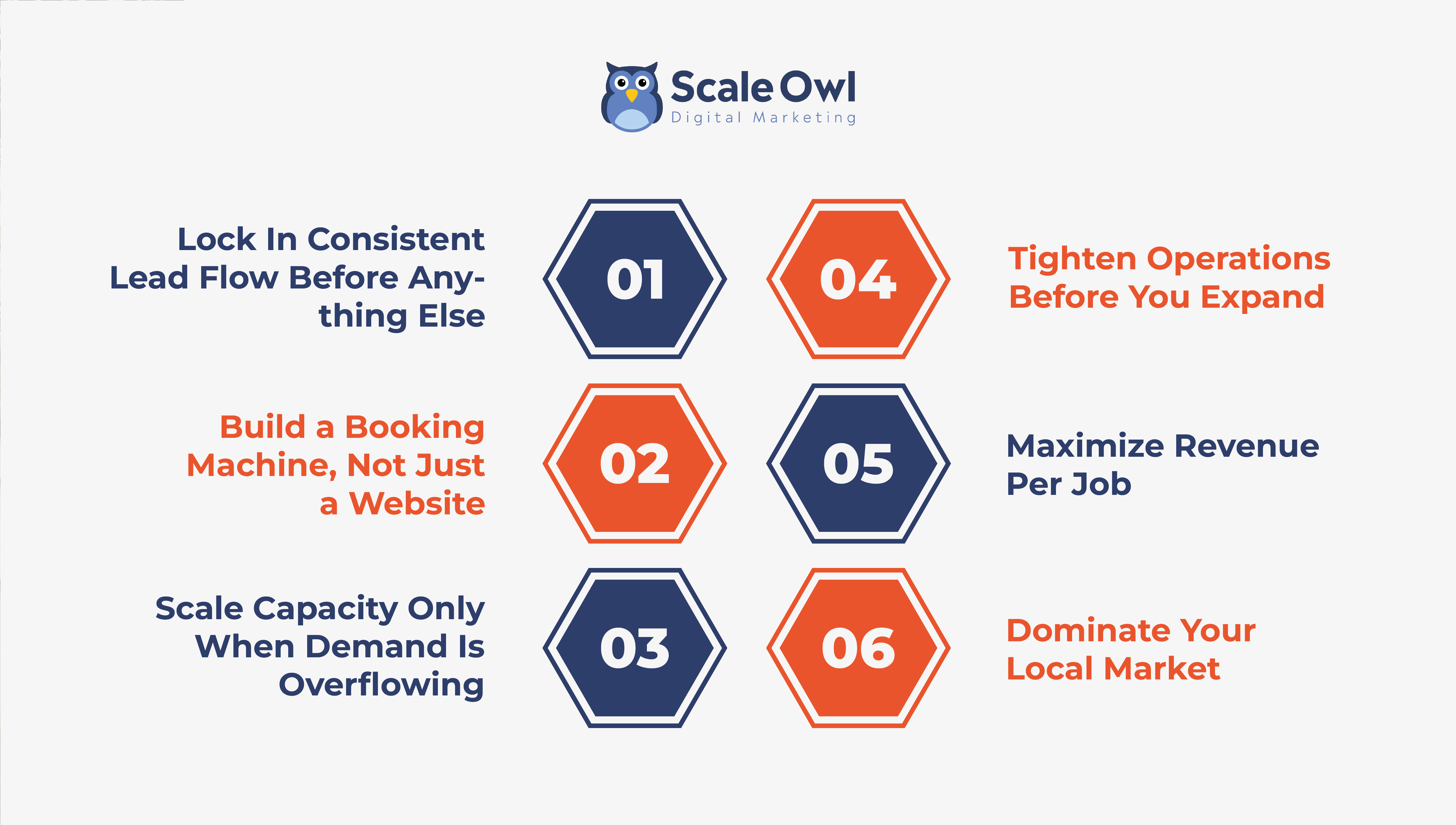
Step 5 — Maximize Revenue Per Job
Scaling isn't just about volume. It's about profit per job.
The operators who scale the fastest aren't just running more trucks — they're making more money from every single drop. Here's how:
• Offer multiple dumpster sizes to serve more project types
• Charge add-on fees for overweight loads and extended rental periods
• Build contractor partnerships for recurring, reliable revenue
• Create repeat customer systems — loyalty discounts, referral incentives, follow-up sequences
When each job is worth more, you need fewer jobs to hit your revenue goals — and scaling feels like acceleration instead of desperation.
Step 6 — Dominate Your Local Market
Here's where things get exciting. Here's where the business shifts.
When you combine Google Ads, local SEO, retargeting, and social proof into one cohesive strategy, something remarkable starts to happen: people start telling you "I see you everywhere."
That's not an accident. That's a system working exactly as designed.
Scaling roll off dumpster business to multiple trucks is the outcome of market domination — not the cause of it. When you're the most visible, most trusted, most accessible operator in your area, the trucks don't sit idle. They run. Every single day.
You stop competing. You start controlling.
The Real Cost of NOT Scaling Properly
Let's be direct about what happens if you skip steps and move too fast:
• You buy trucks before demand justifies them
• You burn through cash reserves in the first 60 days
• You get overwhelmed and your service quality drops
• You scale back — publicly, painfully, expensively
And while you're dealing with that fallout?
Your competitor — the one who followed the right sequence — just added two trucks, locked up the best contractor relationships in your area, and is showing up on every search in your city.
That's not a scare tactic. That's the market.
What Scaling the Right Way Actually Feels Like
When you do this in order lead flow first, booking system second, operations tight, then capacity scaling stops feeling like a gamble and starts feeling like a decision.
It looks like:
• Your phone rings daily with qualified leads who are ready to book
• Jobs filled days in advance, not scrambled together the morning of
• Trucks running consistently not sitting in the yard burning money
• Revenue growing month over month with a predictable, trackable system
And most importantly you're building a business that gives you freedom. Not one that traps you in daily chaos.
Ready to Build the Business You Actually Wanted?
If you're serious about going from one truck to multiple trucks from inconsistent jobs to predictable, growing revenue it starts with one thing:
A clear, proven growth strategy built for dumpster rental operators.
At Scale Owl Digital Marketing, we help roll off dumpster companies generate consistent high-quality leads, fill their schedules, and scale profitably without the guesswork that burns most operators.
Book your free strategy call today. We'll show you exactly what's holding your growth back and how to fix it fast.
Because every missed call right now? That's another truck you should already have on the road.
Frequently Asked Questions
Everything you've been meaning to ask about growing your dumpster rental company the right way.
Q1: When is the right time to start scaling roll off dumpster business to multiple trucks?
The right time is when demand is already outpacing your current capacity. Specifically: when you're consistently turning down jobs, your calendar is full most weeks, and you're booked out 3+ days in advance. If those conditions aren't met yet, the priority should be building your lead flow and booking system first.
Q2: How much should I invest in marketing before adding a second truck?
There's no universal number, but a good rule of thumb: your marketing spend should be generating a consistent, measurable volume of leads that justifies the overhead of an additional truck. If you can't trace your bookings to specific marketing channels and predict next month's revenue with reasonable confidence, you're not ready to add fixed costs.
Q3: What's the most common mistake operators make when scaling?
Buying equipment before securing demand. The truck is the easy part — it's a transaction. Generating consistent, qualified bookings is the hard part. Most operators reverse the order, end up with idle trucks, and then blame the market. The market isn't the problem. The sequencing is.
Q4: Do I need a full-time driver before adding a second truck?
Not necessarily at first. Many operators start by running a second truck part-time, using contract or on-call drivers for overflow days. This lets you test demand, build cash flow, and hire full-time when the revenue supports it rather than locking yourself into payroll before the jobs are there.
Q5: How long does it realistically take to scale to 3+ trucks?
For operators who follow the right sequence lead flow first, booking system, tight operations, then capacity most reach 2-3 trucks within 12-24 months of implementing a real growth strategy. The operators who try to shortcut the process often take longer, because they spend time unwinding the damage before they can move forward.