10 Yard Vs 20 Yard Dumpster: The Only Guide You'll Ever Need to Get This Right
You're already stressed about your project.
The last thing you need is a dumpster problem on top of it.
Wrong size = wasted money. Overflowing bin = project delays. Second rental = paying twice for a mistake you could've avoided in 5 minutes.
This guide fixes that. Right now.
Let's Cut to the Chase First
Most people overthink this decision.
Here's the short version:
Small project. Heavy stuff. Tight space. → 10 yard.
Everything else. → 20 yard.
Now let's make sure you're picking the right one for YOUR situation.
The 10 Yard Dumpster: Small But Mighty
Don't let the size fool you.
A 10 yard dumpster punches above its weight class — especially when you're dealing with heavy, dense debris that would crush the budget on a bigger bin.
What you're looking at:
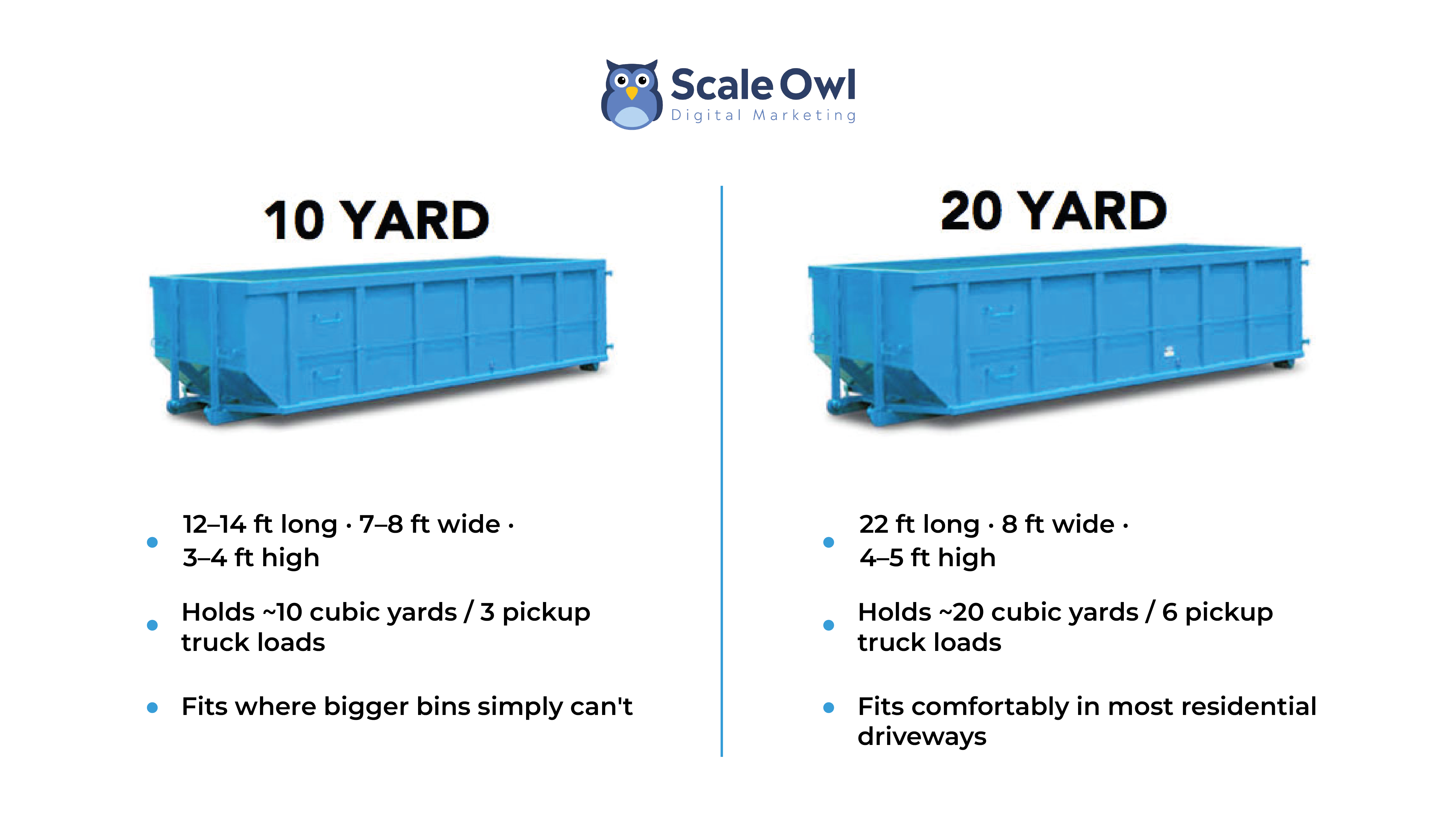
12–14 ft long · 7–8 ft wide · 3–4 ft high
Holds ~10 cubic yards / 3 pickup truck loads
Fits where bigger bins simply can't
Built for:
Garage and attic cleanouts
Single room renovations
Concrete, brick, dirt, asphalt removal
Roofing jobs under 1,500 sq ft
Tight driveways, narrow lots, urban properties
Here's the thing about heavy materials nobody tells you: concrete doesn't care how big your dumpster is. It hits the weight limit long before the bin looks full. A 10 yarder is actually the smarter, more cost-effective call when your debris is dense.
The 20 Yard Dumpster: The One Most People Actually Need
This is where most homeowners go wrong.
They look at the 20 yard, think "that's too much," rent the 10 yard, fill it on Day 2, and spend the rest of the week waiting on a second haul.
Don't be that person.
What you're looking at:
22 ft long · 8 ft wide · 4–5 ft high
Holds ~20 cubic yards / 6 pickup truck loads
Fits comfortably in most residential driveways
Built for:
Whole-home and estate cleanouts
Kitchen, basement, and multi-room remodels
Flooring replacements
Deck demolitions
Bulky furniture, drywall, roofing shingles
Renovations always — always — generate more debris than you expect. What looks like "a few cabinets and some drywall" becomes a mountain by Day 3. The 20 yard gives you breathing room so you can focus on the project, not the overflow problem.
Head-to-Head: 10 Yard Vs 20 Yard Dumpster
10 Yard 20 Yard
Volume 10 cu yds 20 cu yds
Truck Loads ~3 ~6
Best Debris Heavy / dense Bulky / light
Footprint Compact Standard
Sweet Spot Small, defined jobs Medium to large projects
The Ugly Truth About "Saving Money" on a Smaller Dumpster
Here's what actually happens when someone rents a 10 yard to save $50:
Day 1 — loading goes great. Day 2 — it's half full. No problem. Day 3 — it's full. Project isn't.
Now you're calling for an early pickup, waiting around, paying for a second rental, and burning through time you don't have.
That $50 in savings just cost you $150 and two days of your life.
The 20 yard almost always wins on total cost when your project is medium-sized or larger. Rent it right the first time.
Still Not Sure? Ask Yourself These 3 Questions
1. Is my debris heavy or bulky? Heavy (concrete, dirt, brick) → 10 yard. Bulky (furniture, drywall, cabinets) → 20 yard.
2. Is this one room or multiple? One room, well-defined scope → 10 yard. Multiple rooms or whole home → 20 yard. No debate.
3. Can I afford a project delay? If the answer is no — and it never is — size up. Always.
3 Dumpster Mistakes That Will Ruin Your Week
Mistake #1: Underestimating your debris. Every contractor, every homeowner, every single time. The pile is always bigger than it looked in your head. Budget for that reality.
Mistake #2: Ignoring weight limits. A bin that looks half empty can already be overweight. Dense materials lie. Always ask your provider what the weight cap is — before you load a single brick.
Mistake #3: Choosing by price alone. The cheapest rental isn't the cheapest job. Overage fees, second hauls, and delays cost far more than the $30–$50 you saved going smaller.
Frequently Asked Questions
Is a 20 yard dumpster literally twice the size of a 10 yard?
Exactly twice. Not marketing fluff — actual cubic yards. You get double the volume for what's usually a modest price difference.
Will a 20 yard fit in my driveway?
Most residential driveways handle it fine. It runs about 22 feet long, so measure your available space before booking. When in doubt, call your provider — they do this every day.
What size dumpster do I need for a kitchen remodel?
20 yard, full stop. Cabinets, countertops, flooring, drywall — a kitchen remodel generates shocking amounts of debris. You'll fill a 10 yard before the demo is even done.
Which size is better for concrete or dirt removal?
10 yard every time. Heavy materials hit weight limits before they fill the bin. Going bigger doesn't mean you can load more weight — it just means you're paying for volume you can't use.
What if I overfill my dumpster?
It doesn't get hauled. Period. Debris has to sit below the fill line for safe transport. Overfill it and you're looking at delays, extra fees, and a stern call from your rental company. Size up before it becomes your problem.
Can I mix different types of debris?
Usually yes — but not everything. Hazardous materials, electronics, tires, and certain chemicals are almost always restricted. Ask your provider before you load anything questionable.
How long can I keep the dumpster?
Standard rentals run 7–14 days. Extensions are available, usually at a daily rate. If your project timeline is flexible, confirm extension terms upfront so you're not surprised.
What's the biggest mistake first-time renters make?
Renting too small. Every time. It feels like the safe, economical choice — until the bin is full and the project isn't.
Here's Your Decision, Made Simple
Rent the 10 yard if: you're doing a single small cleanout, removing heavy materials, or working with very limited space.
Rent the 20 yard if: you're remodeling, doing a full cleanout, dealing with bulky waste, or you have any doubt at all about capacity.
When in doubt — size up.
Extra space costs a little. A second rental, overage fees, and a delayed project cost a lot.
Pick the right dumpster once. Get the job done. Move on.
Ready to book? Get the size right from the start and your project runs smoother, faster, and cheaper than you'd expect
.
